Last Sunday I returned from the 2012 meeting of the American Historical Association. Although I have attended my share of conferences and unconferences--from Lone Star Ruby Con to Dreamforce and Texas State Historical Association to Museum Computer Network--I'd never attended one of the big mid-year academic conferences before. The experience was strange but fruitful, and I hope I'll be able to attend again.
Let me start with my superficial impressions. First, historians dress much better than developers do, though they really don't hold a candle to the art gallery folks. They also are a more reactive audience, although there is very little back-channel conversation on Twitter -- in fact I was informed that typing on laptops would be considered rude! Finally, they are pretty introverted -- more likely to strike up a conversation with a stranger than your average Rubyist, but not by much.
The conference itself is a bit warped by the fact that many of the attendees are there for the sole purpose of conducting job interviews. This apparently involves a days-long series of thirty-to-ninety minute interviews designed to figure out which candidates to invite to campus for an on-site interview -- a grueling process for the interviewers and an expensive one for the interviewees. (The analogous activity in the software world is the phone screen, in which a hiring manager discusses experience and skill-set with a candidate. Over the phone.) If most attendees are interviewing, they aren't actually participating in the conference -- I was told that around 12,000 people register, but only 5000 attend. This gives AHA a kind of Potemkin village flavor, and it's not unusual to see a panel lecturing to a nearly empty room. In fact, the last session I attended had five speakers on the podium and only three people in the audience.
Nevertheless, AHA2012 and the associated THATCamp were tremendously productive for me. There were several opportunities for collaboration, so while I didn't find my dream partner for FromThePage--that institution with a staff of front-end experts and a burning need for transcription software--I did have some really good conversations. I've been trying to add better support for letters to FromThePage, and Jean Bauer gave me a detailed walk-through of the Project Quincy data model for correspondence. A lot of people were interested in starting their own crowdsourcing projects, and we've been swapping emails since. Most importantly, while I was in town I met with the development team behind Scribe and Talk, the open-source tools that power Citizen Science Alliance projects like OldWeather and AncientLives. I'll be posting about that separately.
One of the things that impressed me most about the history world was the potential there is for a programmer to make a big impact. The graduate student I roomed with was an expert with regular expressions--his texts were in Arabic, so the RTL/LTR mix required him to close his eyes as he composed his patterns--but he had no experience with elementary scripting. In one two-hour hack session, we were able to split a three-hundred-thousand-line medieval biographical dictionary into twenty thousand small files representing individual entries. With a couple more hours' work, we'd have been able to extract dates, places, names, and other data from these files. It is a delight for a software engineer to work in a domain where such minimal effort can make such a difference: most of our work deals with obscure edge cases of hard/boring problems, so removing months of tedious manual labor with an hour's worth of programming is incredibly rewarding.
Crowdsourcing History: Collaborative Transcription and Archives, the panel I presented at, seemed to go well. Moderator Shane Landrum invited the audience to give 3-minute presentations on their own crowdsourcing projects after the presenters finished their 8-minute talks, then he opened the floor for questions. Although I was skeptical about this format, it worked very well indeed. In particular, the Q/A period was blessedly free of the self-promoters who plague events like South by Southwest. Perhaps this can be attributed to the novel format or perhaps it was due to the inherent civility of academic historians -- all I know is that it succeeded. I felt very fortunate to be among the panelists, who were a Who's Who of manuscript transcription tools, although a couple prominent projects were not represented because they were too recent to be included in the proposal. Because the context was already set by my fellow panelists and because the time was so constrained, I decided to concentrate my own talk on one feature of FromThePage: subject indexing through wiki-links. An abbreviated recap of the presentation is embedded below:
On the whole, I think I'd like to go back to the AHA meeting. The conversations and collaborations made the trip worth the expense, and it was gratifying to finally meet the people behind the big transcription projects face-to-face. I even managed to learn some fascinating stuff about American history.
Wednesday, January 18, 2012

Wednesday, December 7, 2011
Developments in Wikisource/ProofreadPage for Transcription
Last year I reviewed Wikisource as a platform for manuscript transcription projects, concluding that the ProofreadPage plug-in was quite versatile, but that unfortunately the en.wikisource.org policy prohibiting any text not already published on paper ruled out its use for manuscripts.
I'm pleased to report that this policy has been softened. About a month ago, NARA started to partner with the Wikimedia Foundation to to host material—including manuscripts—on Wikisource. While I was at MCN, I discussed this with Katie Filbert, the president of Wikimedia DC, who set me straight. Wikisouce is now very interested in partnering with institutions to host manuscripts of importance, but it is still not a place for ordinary people to upload great-grandpa's journal from World War I.
Once you host a project on Wikisource, what do you do with it? Andie, Rob and Gaurav over at the blog So You Think You Can Digitize?—and it's worth your time to read at least the last six posts—have been writing on exactly that subject. Their most recent post describes their experience with Junius Henderson's Field Notes, and although it concentrates on their success flushing out more Henderson material and recounts how they dealt with the wikisource software, I'd like to concentrate on a detail:
So how is the mark-up working out? Gaurav and the team have addressed the differentiation issue by using cross-wiki links, a standard way of linking from an article on one Wikimedia project to another. So the text "English sparrows" in the transcription is annotated
So far so good. The only complaint I can make is that—so far as I can tell—cross-wiki links don't appear in the "What links here" screen tool on Wikipedia, neither for Passer domesticus, nor for House Sparrow. This means that the annotation can't provide an indexing function, so that users can't see all the pages that reference possums, nor read a selection of those pages. I'm not sure that the cross-wiki link data isn't tracked, however — just that I can't see it in the UI. Tantalizingly, cross-wiki links are tracked when images or other files are included in multiple locations: see the "Global file usage" section of the sparrow image, for example. Perhaps there is an API somewhere that the Henderson Field Note project could use to mine this data, or perhaps they could move their links targets from Wikipedia articles to some intermediary in a different Wikisource namespace.
Regardless, the direction Wikisource is moving should make it an excellent option for institutions looking to host documentary transcription projects and experiment with crowdsourcing without running their own servers. I can't wait to see what happens once Andie, Rob, and Gaurav start experimenting with PediaPress!
I'm pleased to report that this policy has been softened. About a month ago, NARA started to partner with the Wikimedia Foundation to to host material—including manuscripts—on Wikisource. While I was at MCN, I discussed this with Katie Filbert, the president of Wikimedia DC, who set me straight. Wikisouce is now very interested in partnering with institutions to host manuscripts of importance, but it is still not a place for ordinary people to upload great-grandpa's journal from World War I.
Once you host a project on Wikisource, what do you do with it? Andie, Rob and Gaurav over at the blog So You Think You Can Digitize?—and it's worth your time to read at least the last six posts—have been writing on exactly that subject. Their most recent post describes their experience with Junius Henderson's Field Notes, and although it concentrates on their success flushing out more Henderson material and recounts how they dealt with the wikisource software, I'd like to concentrate on a detail:
What we currently want is a no-cost, minimal effort system that will make scans AND transcriptions AND annotations available, and that can facilitate text mining of the transcriptions. Do we have that in WikiSource? We will see. More on annotations to follow in our next post but some father to a sister of some thoughts are already percolating and we have even implemented some rudimentary examples.This is really exciting stuff. They're experimenting with wiki mark-up of the transcriptions with the goal of annotation and text-mining. I tried to do this back in 2005, but abandoned the effort because I never could figure out how to clearly differentiate MediaWiki articles about subjects (i.e. annotations) from articles that presented manuscript pages and their transcribed text. The lack of wiki-linking was also the one of my criticisms most taken to heart by the German Wikisource community last October.
So how is the mark-up working out? Gaurav and the team have addressed the differentiation issue by using cross-wiki links, a standard way of linking from an article on one Wikimedia project to another. So the text "English sparrows" in the transcription is annotated
[[:w:Passer domesticus|English sparrows]], which is wiki-speak for Link the text "English sparrows" to the Wikipedia article "Passer domesticus". Wikipedia's redirects then send the browser off to the article "House Sparrow".So far so good. The only complaint I can make is that—so far as I can tell—cross-wiki links don't appear in the "What links here" screen tool on Wikipedia, neither for Passer domesticus, nor for House Sparrow. This means that the annotation can't provide an indexing function, so that users can't see all the pages that reference possums, nor read a selection of those pages. I'm not sure that the cross-wiki link data isn't tracked, however — just that I can't see it in the UI. Tantalizingly, cross-wiki links are tracked when images or other files are included in multiple locations: see the "Global file usage" section of the sparrow image, for example. Perhaps there is an API somewhere that the Henderson Field Note project could use to mine this data, or perhaps they could move their links targets from Wikipedia articles to some intermediary in a different Wikisource namespace.

Regardless, the direction Wikisource is moving should make it an excellent option for institutions looking to host documentary transcription projects and experiment with crowdsourcing without running their own servers. I can't wait to see what happens once Andie, Rob, and Gaurav start experimenting with PediaPress!
Friday, November 18, 2011
Crowdsourcing Transcription at MCN 2011
These are links to the papers, websites, and systems mentioned in my presentation at the Museum Computer Network 2011 conference.
- Can't OCR Cursive
- "Toward Searchable Indexes for Handwritten Documents", Kennard and Barrett
- Genealogy
- Natural Science
- Atlas of Living Australia Australian Museum Cicada Expedition
- Botanical Society of the British Isles Herbaria@Home
- Open Source/Creative Commons
- Wikisource for Manuscript Tranascription (my review)
- Open Genealogy Alliance (UK)
- Libraries
- What's on the Menu? New York Public Library
- University of Iowa Libraries Civil War Diaries and Letters
- North Carolina Family History Transcription Project, Government and Heritage Library, State Library of North Carolina
- Archives
- Stadsarchief Amsterdam's Militieregisters.nl and Velehanden.nl
- Public Records Office Victoria
- Museums
- San Diego Natural History Museum's Laurence Klauber Field Notes
- Why?
- North American Bird Phenology Program User Satisfaction Survey
- OldWeather
- DigitalKoot
- North American Bird Phenology Program Top 50 Transcribers
- North American Bird Phenology Projgram April Newsletter
- Code4Lib Journal, "Using Amazon Mechanical Turk to Transcribe Historical Handwritten Documents
- How will you use the transcription?
- Transcribe Bentham
- Julia Brumfield Diaries view of references to Irvin Harvey
- Papers of the War Department
- Tools
- Wikisource/ProofreadPage (see review above)
- FromThePage on GitHub
- Scripto on GitHub
- Bentham Transcription Desk on Google Code
- Zooniverse Scribe on GitHub
- OpenScribe on Google Code
Friday, August 5, 2011
Programmers: Wikisource Needs You!
Wikisource is powered by a MediaWiki extension which allows page images to be displayed beside the wiki editing form. This extension also handles editorial workflow by allowing pages, chapters, and books to be marked as unedited, partially edited, in need of review, or finished. It's a fine system, and while the policy of the English language Wikisource community prevents it from being used for manuscript transcription, there are active manuscript projects using the software in other communities.
Yesterday, Mark Hershberger wrote this in a comment: For what its worth the extension used by WikiSource, ProofreadPage, now needs a maintainer. I posted about this here: http://thread.gmane.org/gmane.science.linguistics.wikipedia.technical/54831
While I'm sorry to hear it, this is an excellent opportunity for someone with Mediawiki skills to do some real good.
Yesterday, Mark Hershberger wrote this in a comment: For what its worth the extension used by WikiSource, ProofreadPage, now needs a maintainer. I posted about this here: http://thread.gmane.org/gmane.
While I'm sorry to hear it, this is an excellent opportunity for someone with Mediawiki skills to do some real good.
Tuesday, July 26, 2011
Can a Closed Crowdsourcing Project Succeed?
Last night, the Zooniverse folks announced their latest venture: Ancient Lives, which invites the public to help analyze the Oxyrhynchus Papyri. The transcription tool meets the high standards we now expect from the team who designed Old Weather, but the project immediately stirred some controversy because of its terms of use:

Sean is referring to this section of the copyright statement (technically, not a terms of use), which is re-displayed from the tutorial:
I will be very interested to see how the Ancient Lives project fares compared to GalaxyZoo's other successes. If the transcriptions are posted and accessible on their own site, users may not care about the legal ownership of the results of their labor. They've already had 100,000 characters transcribed, so perhaps these concerns are irrelevant for most volunteers.

Sean is referring to this section of the copyright statement (technically, not a terms of use), which is re-displayed from the tutorial:
Images may not be copied or offloaded, and the images and their texts may not be published. All digital images of the Oxyrhynchus Papyri are © Imaging Papyri Project, University of Oxford. The papyri themselves are owned by the Egypt Exploration Society, London. All rights reserved.Future use of the transcriptions may be hinted at a bit on the About page:
The papyri belong to the Egypt Exploration Society and their texts will eventually be published and numbered in Society's Greco-Roman Memoirs series in the volumes entitled The Oxyrhynchus Papyri.It should be noted that the closed nature of the project is likely a side-effect of UK copyright law, not a policy decision by the Zooniverse team. In the US, a scan or transcription of a public domain work is also public domain and not subject to copyright. In the UK, however, scanning an image creates a copyright in the scan, so the up-stream providers automatically are able to restrict down-stream use of public domain materials. In the case of federated digitization projects this can create a situation like that of the Old Bailey Online, where different pieces of a seemingly-seamless digital database are owned by entirely different institutions.
I will be very interested to see how the Ancient Lives project fares compared to GalaxyZoo's other successes. If the transcriptions are posted and accessible on their own site, users may not care about the legal ownership of the results of their labor. They've already had 100,000 characters transcribed, so perhaps these concerns are irrelevant for most volunteers.
Wednesday, July 20, 2011
Crowdsourcing and Variant Digital Editions
Writing at the JISC Digitization Blog, Alastair Dunning warns of "problems with crowdsourcing having the ability to create multiple editions."
When we're talking about crowdsourced editions, we're usually talking about user-generated content that is produced in collaboration with an editor or community manager. Without exception, this requires some significant technical infrastructure -- a wiki platform for transcribing free-form text or an even more specialized tool for transcribing structured data like census records or menus. For most projects, the resulting edition is hosted on that same platform -- the Bentham wiki which displays the transcriptions for scholars to read and analyze is the same tool that volunteers use to create the transcriptions. This kind of monolithic platform does not lend itself to the kind of divergence you describe: copies of the edition are always dated as soon as they are separated from the production platform, and making a full copy of the production platform requires a major rift among the editors and volunteer community. These kind of rifts can happen--in my world of software development, the equivalent phenomenon is a code fork--but they're very rare.
But what about projects which don't run on a monolithic platform? There are a few transcription projects in which editing is done via a wiki (Scripto) or webform (UIowa) but the transcriptions are posted to a content management system. There is indeed potential for the "published" version on the CMS to drift from the "working" version on the editing platform, but in my opinion the problem lies not in crowdsourcing, but in the attempt to impose a traditional publishing model onto a participatory project by inserting editorial review in the wrong place:
Imagine a correspondence transcription project in which volunteers make their edits on a wiki but the transcriptions are hosted on a CMS. One model I've seen often involves editors taking the transcriptions from the wiki system, reviewing and editing them, then publishing the final versions on the CMS. This is a tempting work-flow -- it makes sense to most of us both because the writer/editor/reader roles are clearly defined and because the act of copying the transcription to the CMS seems analogous to publishing a text. Unfortunately, this model fosters divergence between the "published" edition and the working copy as voluteers continue to make changes to the transcriptions on the wiki, sometimes ignoring changes made by the reviewer, sometimes correcting text regardless of whether a letter has been pushed to the CMS. The alternative model has reviewers make their edits within the wiki system itself, with content pushed to the CMS automatically. In this model, the wiki is the system-of-record; the working copy is the official version. Since the CMS simply reflects the production platform, it does not diverge from it. The difficulty lies in abandoning the idea of a final version.
It's not at all clear to me how EEBO or ECCO are examples of crowdsourcing, rather than traditional restricted-access databases created and distributed through traditional means, so I'm not sure that they're good examples.
Variant editions are indeed a worrisome prospect, but I don't think that it's unique to projects created through crowdsourcing. In fact, I think that the mechanism of producing crowdsourced editions actually reduces the possibility for variants to emerge. Dunning and I corresponded briefly over Twitter, then I wrote this comment to the JISC Digitization blog. Since that blog seems to be choking on the mark-up, I'll post my reply here:For example, the much-lauded Early English Books Online (EEBO) and Eighteenth Century Collections Online (ECCO) are now beginning to appear on many different digital platforms.
ProQuest currently hold a licence that allows users to search over the entire EEBO corpus, while Gale-Cengage own the rights to ECCO.
Meanwhile, JISC Collections are planning to release a platform entitled JISC Historic Books, which makes licenced versions of EEBO and ECCO available to UK Higher Education users.
And finally, the Universities of Michigan and Oxford are heading the Text Creation Partnership (TCP), which is methodically working its way through releasing full-text versions of EEBO, ECCO and other resources. These versions are available online, and are also being harvested out to sites like 18th Century Connect.
So this gives us four entry points into ECCO – and it’s not inconceivable that there could be more in the future.
What’s more, there have been some initial discussions about introducing crowdsourcing techniques to some of these licensed versions; allowing permitted users to transcribe and interpret the original historical documents. But of course this crowdsourcing would happen on different platforms with different communities, who may interpret and transcribe the documents in different way. This could lead to the tricky problem of different digital versions of the corpus. Rather than there being one EEBO, several EEBOs exist.
benwbrum Reading @alastairdunning's post connectingI'd like to explore this a bit more. I think that variant editions are less likely in a crowdsourced project than in a traditional edition, but efforts to treat crowdsourced editions in a traditional manner can indeed result in the situation you warn against.
crowdsourcing to variant editions: bit.ly/raVuzo Feel like Wikipedia
solved this years ago.
benwbrum If you don't publish (i.e. copy) a "final" edition of a crowdsourced transcription, you won't have variant "final" versions.
benwbrum The wiki model allows linking to a particular version of an article. I expanded this to the whole work: link
alastairdunning But does that work with multiple providers offering restricted access to the same corpus sitting on different platforms?
alastairdunning ie, Wikipedia can trace variants cause it's all on the same platform; but there are multiple copies of EEBO in different places
benwbrum I'd argue the problem is the multiple platforms, not the crowdsourcing.
alastairdunning Yes, you're right. Tho crowdsourcing considerably amplifies the problem as the versions are likely to diverge more quickly
benwbrum You're assuming multiple platforms for both reading and editing the text? That could happen, akin to a code fork.
benwbrum Also, why would a crowd sourced edition be restricted? I don't think that model would work.
When we're talking about crowdsourced editions, we're usually talking about user-generated content that is produced in collaboration with an editor or community manager. Without exception, this requires some significant technical infrastructure -- a wiki platform for transcribing free-form text or an even more specialized tool for transcribing structured data like census records or menus. For most projects, the resulting edition is hosted on that same platform -- the Bentham wiki which displays the transcriptions for scholars to read and analyze is the same tool that volunteers use to create the transcriptions. This kind of monolithic platform does not lend itself to the kind of divergence you describe: copies of the edition are always dated as soon as they are separated from the production platform, and making a full copy of the production platform requires a major rift among the editors and volunteer community. These kind of rifts can happen--in my world of software development, the equivalent phenomenon is a code fork--but they're very rare.
But what about projects which don't run on a monolithic platform? There are a few transcription projects in which editing is done via a wiki (Scripto) or webform (UIowa) but the transcriptions are posted to a content management system. There is indeed potential for the "published" version on the CMS to drift from the "working" version on the editing platform, but in my opinion the problem lies not in crowdsourcing, but in the attempt to impose a traditional publishing model onto a participatory project by inserting editorial review in the wrong place:
Imagine a correspondence transcription project in which volunteers make their edits on a wiki but the transcriptions are hosted on a CMS. One model I've seen often involves editors taking the transcriptions from the wiki system, reviewing and editing them, then publishing the final versions on the CMS. This is a tempting work-flow -- it makes sense to most of us both because the writer/editor/reader roles are clearly defined and because the act of copying the transcription to the CMS seems analogous to publishing a text. Unfortunately, this model fosters divergence between the "published" edition and the working copy as voluteers continue to make changes to the transcriptions on the wiki, sometimes ignoring changes made by the reviewer, sometimes correcting text regardless of whether a letter has been pushed to the CMS. The alternative model has reviewers make their edits within the wiki system itself, with content pushed to the CMS automatically. In this model, the wiki is the system-of-record; the working copy is the official version. Since the CMS simply reflects the production platform, it does not diverge from it. The difficulty lies in abandoning the idea of a final version.
It's not at all clear to me how EEBO or ECCO are examples of crowdsourcing, rather than traditional restricted-access databases created and distributed through traditional means, so I'm not sure that they're good examples.
Tuesday, February 15, 2011
My Goals for FromThePage
A couple of recent interactions have made me realize that I've never publicly articulated my goals in developing FromThePage. Like anyone else managing a multi-year project, my objectives have shifted over time. However, there are three main themes of my work developing web-based software for transcribing handwritten documents:
- Transcribing and publishing family diaries. FromThePage was developed to allow me and my immediate family to collaboratively transcribe the diaries of Julia Craddock Brumfield (fl. 1915-1936), my great-great grandmother. This objective has drifted over time to include the diaries of Jeremiah White Graves (fl. 1823-1878) as well, but despite that addition the effort is on track to achieve this original goal. Since the website was announced to my extended family in early 2009, Linda Tucker—a cousin whom I'd never met—has transcribed every single page I've put online, then located and scanned three more diaries that were presumed lost. The only software development work remaining to complete this goal is the integration of the tool with a publish-on-demand service so that we may distribute the diaries to family members without Internet access.
- Creating generally useful transcription software. As I developed FromThePage, I quickly realized that the tool would be useful to anyone transcribing, indexing and annotating handwritten material. It seemed a waste to pour effort into a tool that was only accessible to me, so a new goal arose of converting FromThePage into a viable multi-user software project. This has been a more difficult endeavor, but in 2010 I released FromThePage under the AGPL, and it's been adopted with great enthusiasm by the Balboa Park Online Collaborative for transcription projects at the San Diego Natural History Museum.
- Providing access to privately-held manuscripts. The vision behind FromThePage is to generalize my own efforts digitizing family diaries across the broader public. There is what I call an invisble archive--an enormous collection of primary documents that is distributed among the filing cabinets, cedar chests, and attics of the nation's nostalgic great aunts, genealogists, and family historians. This archive is inaccessible to all but the most closely connected family and neighbors of the documents' owners — indeed it's most often not merely inaccessible but entirely unknown. When effort is put into researching this archival material, it's done by amateurs like myself, and more often than not the results are naïve works of historical interpretation: rather than editing and annotating a Civil War diary, the researcher draws from it to create yet another Lost Cause narrative. I would love for FromThePage to transform this situation, channeling amateur efforts into digitizing and sharing irreplaceable primary material with researchers and family members alike. This has proven a far greater challenge than my proximate or intermediate goals: technically speaking the processing and hosting of page scans has been costly and difficult, while my efforts to recruit from the family history community have met with little success. Nevertheless I remain hopeful that events like this month's RootsTech conference will build the same online network among family researchers that THATCamp has among professional digital humanists.
Wednesday, February 2, 2011
2010: The Year of Crowdsourcing Transcription
2010 was the year that collaborative manuscript transcription finally caught on.
Back when I started work on FromThePage in 2005, I got the same response from most people I told about the project: "Why don't you just use OCR software?" To say that the challenges of digitizing handwritten material were poorly understood might be inaccurate—after all the TEI standard included an entire chapter on manuscripts—but there were no tools in use designed for the purpose. Five years later, half a dozen web-based transcription projects are in progress and new projects may choose from several existing tools to host their own. Crowdsourced transcription was even the written up in the New York Times!
I'm going to review the field as I see it, then make some predictions for 2011.
Ongoing Structured Transcription Projects
By far the most successful transcription project is FamilySearch Indexing. In 2010, 185,900,667 records were transcribed from manuscript census forms, parish registers, tithe lists, and other sources world-wide. This brings the total up to 437,795,000 records double-keyed and reconciled by more than four hundred thousand volunteers — itself an awe-inspiring number with an equally impressive support structure.
October saw the launch of OldWeather, a project in which GalaxyZoo applied its crowdsourcing technology to transcription of Royal Navy ship's logs from WWI. As I write, volunteers have transcribed an astonishing 308169 pages of logs — many of which include multiple records. I hope to do a more detailed review of the software soon, but for now let me note how elegantly the software uses the data itself to engage volunteers, so that transcribers can see the motion of "their ship" on a map as they enter dates, latitudes and longitudes. This leverages the immersive nature of transcription as an incentive, projecting users deep within history.
The North American Bird Phenology Program transcribed nearly 160,000 species sighting cards between December 2009 and 2010 and maintained their reputation as a model for crowdsourcing projects by publishing the first user satisfaction survey for a transcription tool. Interestingly the program seems to have followed a growth pattern a bit similar to Wikipedia's, as the cards transcribed rose from 203,967 to 362,996 while the number of volunteers only increased from 1,666 to 2,204 (32% vs 78%) — indicating that a core of passionate volunteers remain the most active contributors.
I've only recently discovered Demogen, a project operated by the Belgium Rijksarchief to enlist the public to index handwritten death notices. Although most of the documentation is in Flemish, the Windows-based transcription software will also operate in French. I've had trouble finding statistics on how many of the record sets have been completed (a set comprising a score of pages with half a dozen personal records per page). By my crude estimate, the 4000ish sets are approximately 63% indexed — say a total of 300,000 records to date. I'd like to write a more detailed review of Demogen/Visu and would welcome any pointers to project status and community support pages.
Ancestry.com's World Archives Project has been operating since 2008, but I've been unable to find any statistics on the total number of records transcribed. The project allows volunteers to index personal information from a fairly heterogeneous assortment of records scanned from microfilm. Each set of records has its own project page with help and statistics. The keying software is a Windows-based application free for download by any Ancestry.com registered user, while support is provided through discussion boards and a wiki.
Ongoing Free-form Transcription Projects
While I've written about Wikisource and its ProofreadPage plug-in before, it remains worth very much following. More than two hundred thousand scanned pages have been proofread, had problems reconciled, and been reviewed out of 1.3 million scanned pages. Only a tiny percent of those are handwritten, but that's still a few thousand pages, making it the most popular automated free-form transcription tool.
This blog was started to track my own work developing FromThePage to transcribe Julia Brumfield's diaries. As I type, beta.fromthepage.com hosts 1503 transcribed pages—of which 988 are indexed and annotated—and volunteers are now waiting on me to prepare and upload more page images. Major developments in 2010 included the release of FromThePage on GitHub under a Free software license and installation of the software by the Balboa Park Online Collaborative for transcription projects by their member institutions.
Probably the biggest news this year was TranscribeBentham, a project at University College London to crowdsource the transcription of Jeremy Bentham's papers. This involved the development of Transcription Desk, a MediaWiki-based tool which is slated to be released under an open-source license. The team of volunteers had transcribed 737 pages of very difficult handwriting when I last consulted the Benthamometer. The Bentham team has done more than any other transcription tool to publicize the field -- explaining their work on their blog, reaching out through the media (including articles in the Chronicle of Higher Education and the New York Times), and even highlighting other transcription projects on Melissa Terras's blog.
Halted Transcription Projects
The Historic Journals project is a fascinating tool for indexing—and optionally transcribing—privately-held diaries and journals. It's run by Doug Kennard at at Brigham Young University, and you can read about his vision in this FHT09 paper. Technically, I found a couple of aspects of the project to be particularly innovative. First, the software integrates with ContentDM to display manuscript page images from that system within its own context. Second, the tool is tightly integrated with FamilySearch, the LDS Church's database of genealogical material. It uses the FamilySearch API to perform searches for personal or place names, and can then use the FamilySearch IDs to uniquely identify subjects mentioned within the texts. Unfortunately, because the FamilySearch API is currently limited to LDS members, development on Historic Journals has been temporarily halted.
Begun as a desktop application in 1998, the uScript Transcription Assistant is the longest-running program in the field. Recently ported over to modern web-based technologies, the system is similar to Img2XML and T-PEN in that it links individual transcribed words to the corresponding images within the scanned page. Although the system is not in use and the source-code is not accessible outside WPI, you can read papers describing it by WPI students in 2003 or in 2005 by Fabio Carrera (the faculty member leading the project). Unfortunately, according to Carrera's blog work on the project has stopped for lack of funding.
According to the New York Times article, there was an attempt to crowdsource the Papers of Abraham Lincoln. The article quotes project director Daniel Stowell explaining that nonacademic transcribers "produced so many errors and gaps in the papers that 'we were spending more time and money correcting them as creating them from scratch.'" The prototype transcription tool (created by NCSA at UIUC) has been abandoned.
Upcoming Transcription ProjectsThe Center for History and New Media at George Mason University is developing a transcription tool called Scripto based on MediaWiki and architected around integration with an external CMS for hosting page images. The initial transcription project will be their Papers of the War Department site, but connector scripts for other content management systems are under development. Scripto is being developed in a particularly open manner, with the source code available for immediate inspection and download on GitHub and a project blog covering the tool's progress.
T-PEN is a tool under development by Saint Louis Univiersity to enable line-by-line transcription and paleographic annotation. It's focused on medieval manuscripts, and automatically identifies the lines of text within a scanned page — even if that page is divided into columns. The team integrated crowdsourcing into their development process by challenging the public to test and give feedback on their line identification algorithm, gathering perhaps a thousand ratings in a two week period. There's no word on whether T-PEN will be released under a free license. I should also mention that they've got the best logo of any transcription tool.
I covered Militieregisters.nl at length below, but the most recent news is that a vendor has been picked to develop the VeleHanden transcription tool. I would not be at all surprised if 2011 saw the deployment of that system.
The Balboa Park Online Collaborative is going into collaborative transcription in a big way with the Field Notes of Laurence Klauber for the San Diego Natural History Museum. They've picked my own FromThePage to host their transcriptions, and have been driving a lot of the development on that system since October through their enthusiastic feature requests, bug reports, and funding. Future transcription projects are in the early planning stages, but we're trying to complete features suggested by the Klauber material first.
The University of Iowa Libraries plan to crowdsource transcription of their Historic Iowa Children's Diaries. There is no word on the technology they plan to use.
The Getty Research Institute plans to crowdsource transcription of J. Paul Getty's diaries. This project also appears to be in the very early stages of planning, with no technology chosen.
Invisible Australians is a digitization project by Kate Bagnall and Tim Sherratt to explore the lives of Australians subjected to the White Australia policy through their extensive records. While it's still in the planning stages (with only a set of project blogs and a Zotero library publicly visible), the heterogeneity of the source material make it one of the most ambitious documentary transcription projects I've seen. Some of the data is traditionally structured (like government forms), some free-form (like letters), and there are photographs and even hand-prints to present alongside the transcription! Invisible Australians will be a fascinating project to follow in 2011.
Obscure Transcription Projects
Because the field is so fragmented, there are a number of projects I follow that are not entirely automated, not entirely public, not entirely collaborative, moribund or awaiting development. In fact, some projects have so little written about them online that they're almost mysterious.
Predictions for 2011
Emerging Community
Nearly all of the transcription projects I've discussed were begun in isolation, unaware of previous work towards transcription tools. While I expect this fragmented situation to continue--in fact I've seen isolated proposals as recently as Shawn Moore's October 12 HASTAC post--it should lessen a bit as toolmakers and project managers enter into dialogue with each other on comment threads, conference panels or GitHub. Tentative steps were made towards overcoming linguistic division in 2010, with Dutch archivists covering TranscribeBentham and a scattered bit of bloggy conversation between Dutch, German, English and American participants. The publicity given to projects like OldWeather, Scripto, and TranscribeBentham can only help this community form.
No Single Tool
We will not see the development of a single tool that supports transcription of both structured and free-form manuscripts, nor both paleographic and semantic annotation in 2011. The field is too young and fragmented -- most toolmakers have enough work providing the basic functionality required by their own manuscripts.
New Client-side Editors
Although I don't foresee convergence of server tools, there is already some exciting work being done towards Javascript-based editors for TEI, the mark-up language that informs most manuscript annotation. TEILiteEditor is an open-source WYSIWYG for editing TEI, while RaiseXML is an open-source editor for manipulating TEI tags directly. Both projects have seen a lot of activity over the past few weeks, and it's easy to imagine a future in which many different transcription tools support the same user-facing editor.
External Integration
2010 already saw strides being made towards integration with external CMSs, with BYU's Historic Journals serving page images from ContentDM and FromThePage serving page images from the Internet Archive. Scripto is apparently designed entirely around CMS integration, as it does not host images itself and is architected to support connectors for many different content management systems. I feel that this will be a big theme of transcription tool development in 2011, with new support for feeding transcriptions and text annotations back to external CMSs.
Outreach/Volunteer Motivation
We're learning that a key to success in crowdsourcing projects is recruiting volunteers. I think that 2011 will see a lot of attention paid to identifying and enlisting existing communities interested in the subject matter for a transcription project. In addition to finding volunteers, projects will better understand volunteer motivation and the trade-offs between game-like systems that encourage participation through score cards and points on the one hand, and immersive systems that enhance the volunteers' engagement with the text on the other.
Taxonomy
As number of transcription projects multiplies, I think that we will be able to start generalizing from the unique needs of each collection of manuscript material to form a sort of taxonomy of transcription projects. In the list above, I've separated the projects indexing structured data like militia rolls from those dealing with free-form text like diaries or letters. I think that in 2011 we'll be able to classify projects by their paleographic requirements, the kinds of analysis that will be performed on the transcribed texts, the quantity of non-textual images that must be incorporated into the transcription presentation, and other dimensions. It's possible that the existing tools will specialize in a few of these areas, providing support for needs similar to those of their original project so that a sort of decision tree could guide new projects toward the appropriate tool for their manuscript material.
2011 is going to be a great year!
Back when I started work on FromThePage in 2005, I got the same response from most people I told about the project: "Why don't you just use OCR software?" To say that the challenges of digitizing handwritten material were poorly understood might be inaccurate—after all the TEI standard included an entire chapter on manuscripts—but there were no tools in use designed for the purpose. Five years later, half a dozen web-based transcription projects are in progress and new projects may choose from several existing tools to host their own. Crowdsourced transcription was even the written up in the New York Times!
I'm going to review the field as I see it, then make some predictions for 2011.
Ongoing Structured Transcription Projects
By far the most successful transcription project is FamilySearch Indexing. In 2010, 185,900,667 records were transcribed from manuscript census forms, parish registers, tithe lists, and other sources world-wide. This brings the total up to 437,795,000 records double-keyed and reconciled by more than four hundred thousand volunteers — itself an awe-inspiring number with an equally impressive support structure.
October saw the launch of OldWeather, a project in which GalaxyZoo applied its crowdsourcing technology to transcription of Royal Navy ship's logs from WWI. As I write, volunteers have transcribed an astonishing 308169 pages of logs — many of which include multiple records. I hope to do a more detailed review of the software soon, but for now let me note how elegantly the software uses the data itself to engage volunteers, so that transcribers can see the motion of "their ship" on a map as they enter dates, latitudes and longitudes. This leverages the immersive nature of transcription as an incentive, projecting users deep within history.
The North American Bird Phenology Program transcribed nearly 160,000 species sighting cards between December 2009 and 2010 and maintained their reputation as a model for crowdsourcing projects by publishing the first user satisfaction survey for a transcription tool. Interestingly the program seems to have followed a growth pattern a bit similar to Wikipedia's, as the cards transcribed rose from 203,967 to 362,996 while the number of volunteers only increased from 1,666 to 2,204 (32% vs 78%) — indicating that a core of passionate volunteers remain the most active contributors.
I've only recently discovered Demogen, a project operated by the Belgium Rijksarchief to enlist the public to index handwritten death notices. Although most of the documentation is in Flemish, the Windows-based transcription software will also operate in French. I've had trouble finding statistics on how many of the record sets have been completed (a set comprising a score of pages with half a dozen personal records per page). By my crude estimate, the 4000ish sets are approximately 63% indexed — say a total of 300,000 records to date. I'd like to write a more detailed review of Demogen/Visu and would welcome any pointers to project status and community support pages.
Ancestry.com's World Archives Project has been operating since 2008, but I've been unable to find any statistics on the total number of records transcribed. The project allows volunteers to index personal information from a fairly heterogeneous assortment of records scanned from microfilm. Each set of records has its own project page with help and statistics. The keying software is a Windows-based application free for download by any Ancestry.com registered user, while support is provided through discussion boards and a wiki.
Ongoing Free-form Transcription Projects
While I've written about Wikisource and its ProofreadPage plug-in before, it remains worth very much following. More than two hundred thousand scanned pages have been proofread, had problems reconciled, and been reviewed out of 1.3 million scanned pages. Only a tiny percent of those are handwritten, but that's still a few thousand pages, making it the most popular automated free-form transcription tool.
This blog was started to track my own work developing FromThePage to transcribe Julia Brumfield's diaries. As I type, beta.fromthepage.com hosts 1503 transcribed pages—of which 988 are indexed and annotated—and volunteers are now waiting on me to prepare and upload more page images. Major developments in 2010 included the release of FromThePage on GitHub under a Free software license and installation of the software by the Balboa Park Online Collaborative for transcription projects by their member institutions.
Probably the biggest news this year was TranscribeBentham, a project at University College London to crowdsource the transcription of Jeremy Bentham's papers. This involved the development of Transcription Desk, a MediaWiki-based tool which is slated to be released under an open-source license. The team of volunteers had transcribed 737 pages of very difficult handwriting when I last consulted the Benthamometer. The Bentham team has done more than any other transcription tool to publicize the field -- explaining their work on their blog, reaching out through the media (including articles in the Chronicle of Higher Education and the New York Times), and even highlighting other transcription projects on Melissa Terras's blog.
Halted Transcription Projects
The Historic Journals project is a fascinating tool for indexing—and optionally transcribing—privately-held diaries and journals. It's run by Doug Kennard at at Brigham Young University, and you can read about his vision in this FHT09 paper. Technically, I found a couple of aspects of the project to be particularly innovative. First, the software integrates with ContentDM to display manuscript page images from that system within its own context. Second, the tool is tightly integrated with FamilySearch, the LDS Church's database of genealogical material. It uses the FamilySearch API to perform searches for personal or place names, and can then use the FamilySearch IDs to uniquely identify subjects mentioned within the texts. Unfortunately, because the FamilySearch API is currently limited to LDS members, development on Historic Journals has been temporarily halted.
Begun as a desktop application in 1998, the uScript Transcription Assistant is the longest-running program in the field. Recently ported over to modern web-based technologies, the system is similar to Img2XML and T-PEN in that it links individual transcribed words to the corresponding images within the scanned page. Although the system is not in use and the source-code is not accessible outside WPI, you can read papers describing it by WPI students in 2003 or in 2005 by Fabio Carrera (the faculty member leading the project). Unfortunately, according to Carrera's blog work on the project has stopped for lack of funding.
According to the New York Times article, there was an attempt to crowdsource the Papers of Abraham Lincoln. The article quotes project director Daniel Stowell explaining that nonacademic transcribers "produced so many errors and gaps in the papers that 'we were spending more time and money correcting them as creating them from scratch.'" The prototype transcription tool (created by NCSA at UIUC) has been abandoned.
Upcoming Transcription ProjectsThe Center for History and New Media at George Mason University is developing a transcription tool called Scripto based on MediaWiki and architected around integration with an external CMS for hosting page images. The initial transcription project will be their Papers of the War Department site, but connector scripts for other content management systems are under development. Scripto is being developed in a particularly open manner, with the source code available for immediate inspection and download on GitHub and a project blog covering the tool's progress.
T-PEN is a tool under development by Saint Louis Univiersity to enable line-by-line transcription and paleographic annotation. It's focused on medieval manuscripts, and automatically identifies the lines of text within a scanned page — even if that page is divided into columns. The team integrated crowdsourcing into their development process by challenging the public to test and give feedback on their line identification algorithm, gathering perhaps a thousand ratings in a two week period. There's no word on whether T-PEN will be released under a free license. I should also mention that they've got the best logo of any transcription tool.
I covered Militieregisters.nl at length below, but the most recent news is that a vendor has been picked to develop the VeleHanden transcription tool. I would not be at all surprised if 2011 saw the deployment of that system.
The Balboa Park Online Collaborative is going into collaborative transcription in a big way with the Field Notes of Laurence Klauber for the San Diego Natural History Museum. They've picked my own FromThePage to host their transcriptions, and have been driving a lot of the development on that system since October through their enthusiastic feature requests, bug reports, and funding. Future transcription projects are in the early planning stages, but we're trying to complete features suggested by the Klauber material first.
The University of Iowa Libraries plan to crowdsource transcription of their Historic Iowa Children's Diaries. There is no word on the technology they plan to use.
The Getty Research Institute plans to crowdsource transcription of J. Paul Getty's diaries. This project also appears to be in the very early stages of planning, with no technology chosen.
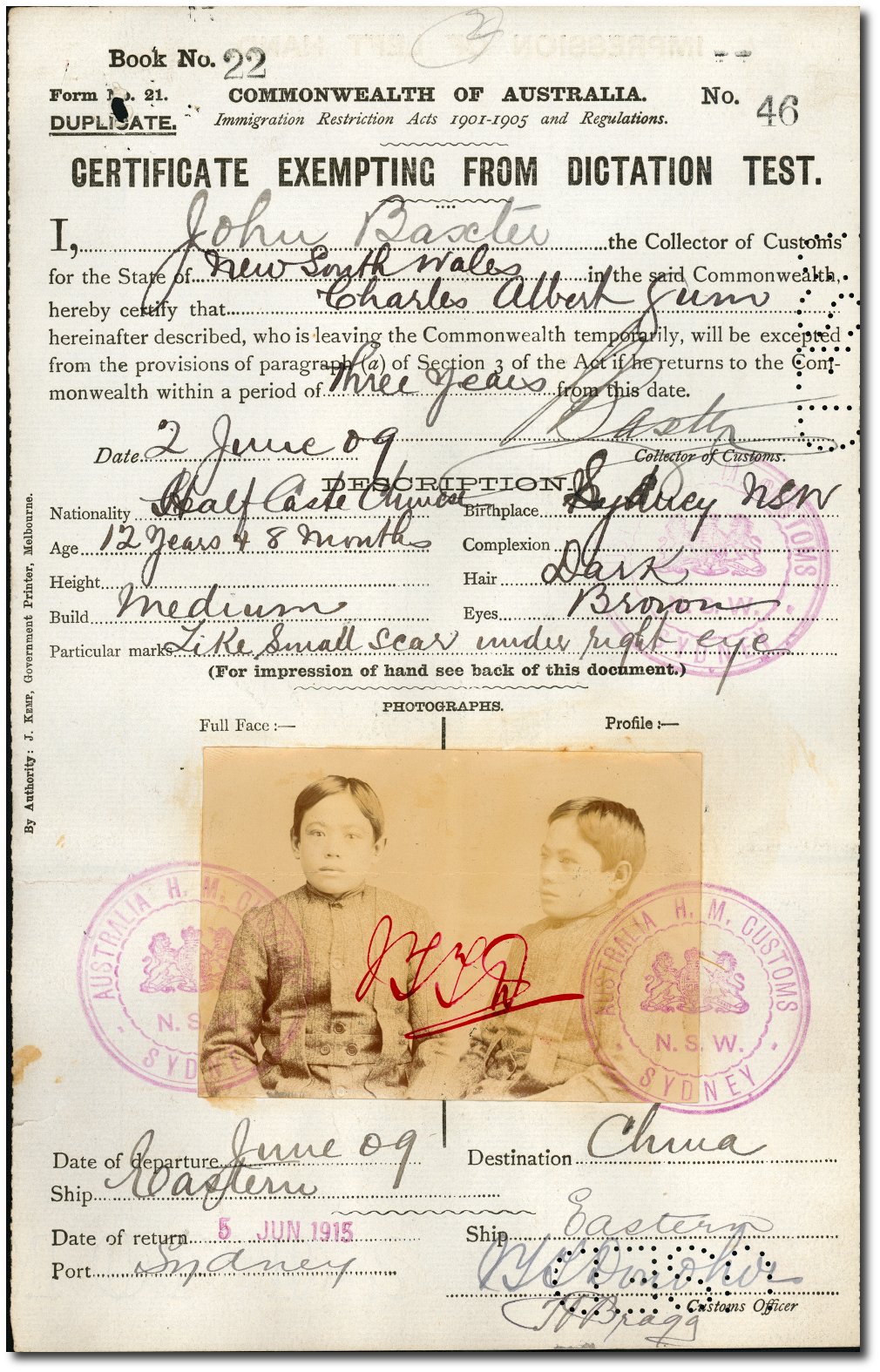
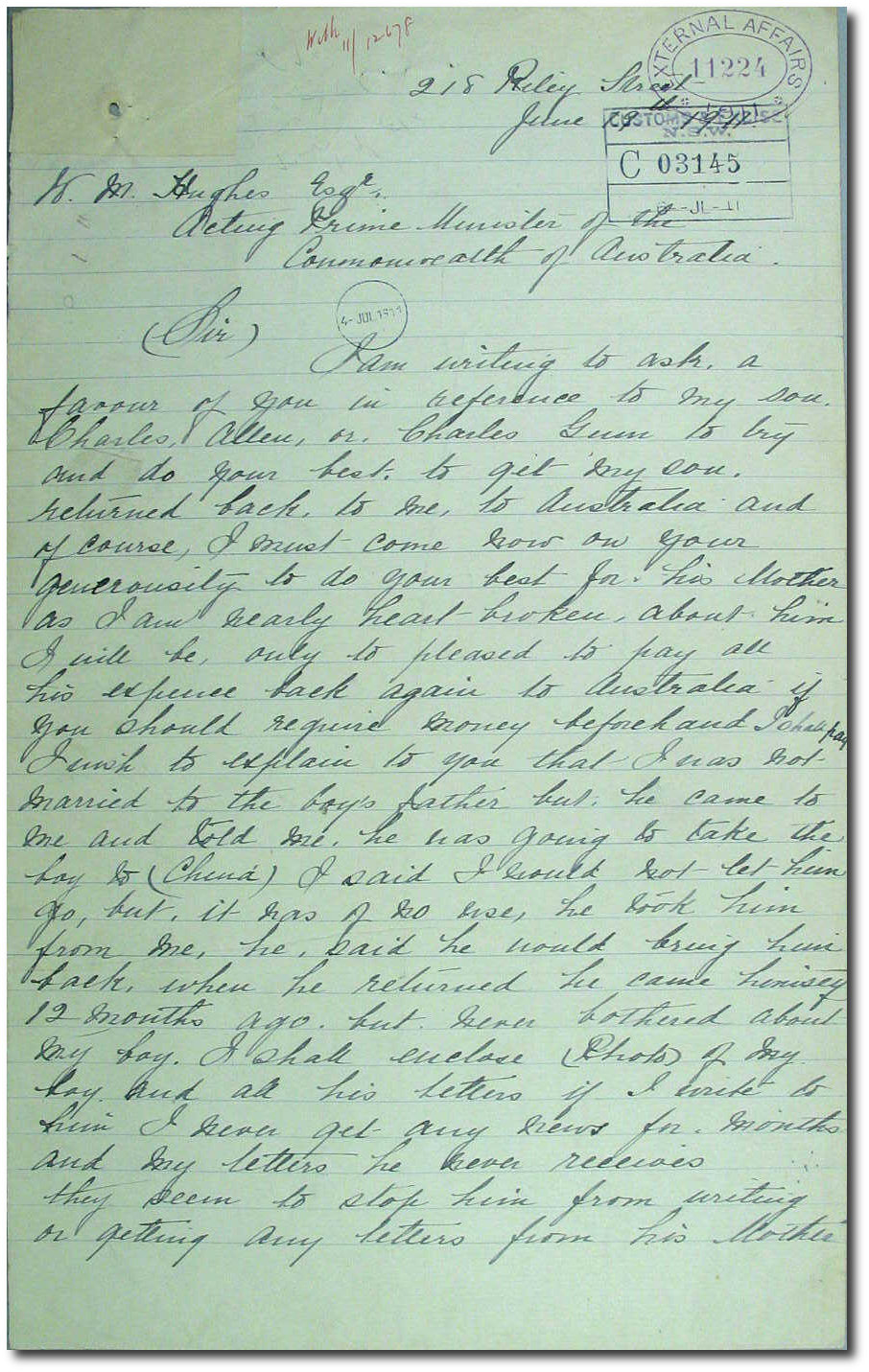
Invisible Australians is a digitization project by Kate Bagnall and Tim Sherratt to explore the lives of Australians subjected to the White Australia policy through their extensive records. While it's still in the planning stages (with only a set of project blogs and a Zotero library publicly visible), the heterogeneity of the source material make it one of the most ambitious documentary transcription projects I've seen. Some of the data is traditionally structured (like government forms), some free-form (like letters), and there are photographs and even hand-prints to present alongside the transcription! Invisible Australians will be a fascinating project to follow in 2011.
Obscure Transcription Projects
Because the field is so fragmented, there are a number of projects I follow that are not entirely automated, not entirely public, not entirely collaborative, moribund or awaiting development. In fact, some projects have so little written about them online that they're almost mysterious.
- Commenters to a blog post at Rogue Classicism are discussing this APA job posting for a Classicist to help develop a new GalaxyZoo project transcribing the Oxyrhynchus Papyri.
- Some cryptic comments on blog posts covering TranscribeBentham point to FadedPage, which appears to be a tool similar to Project Gutenberg's Distributed Proofreaders. Further investigation has yielded no instances of it being used for handwritten material.
- A blog called On the Written, the Digital, and the Transcription tracks development of WrittenRummage, which was apparently a crowdsourced transcription tool that sought to leverage Amazon's Mechanical Turk.
- Van Papier Naar Digitaal is a project by Hans den Braber and Herman de Wit in which volunteers photograph or scan handwritten material then send the images to Hans. Hans reviews them and puts them on the website as a PDF, where Herman publicizes them to transcription volunteers. Those volunteers download the PDF and use Jacob Boerema's desktop-based Transcript software to transcribe the records, which are then linked from Digitale Bronbewerkinge Nederland en België. With my limited Dutch it is hard for me to evaluate how much has been completed, but in the years that the program has been running its results seem to have been pretty impressive.
- BYU's Immigrant Ancestors Project was begun in 1996 as a survey of German archival holdings, then was expanded into a crowdsourced indexing project. A 2009 article by Mark Witmer predicts the immanent roll-out of a new version of the indexing software, but the project website looks quite stale and says that it's no longer accepting volunteers.
- In November, a Google Groups post highlighted the use of Islandora for side-by-side presentation of a page image and a TEI editor for transcription. However I haven't found any examples of its use for manuscript material.
- Wiktenauer is a MediaWiki installation for fans of western martial arts. It hosts several projects transcribing and translating medieval manuals of fighting and swordsmanship, although I haven't yet figured out whether they're automating the transcription.
- Melissa Terras' manuscript transcription blog post mentioned a Drupal-based tool called OpenScribe, built by the New Zealand Electronic Text Centre. However, the Google Code site doesn't show any updates since mid-2009, so I'm not sure how active the project is. This project is particularly difficult to research because "OpenScribe" is also the name chosen for an audio transcription tool hosted on SourceForge as well as a commercial scanning station.
Predictions for 2011
Emerging Community
Nearly all of the transcription projects I've discussed were begun in isolation, unaware of previous work towards transcription tools. While I expect this fragmented situation to continue--in fact I've seen isolated proposals as recently as Shawn Moore's October 12 HASTAC post--it should lessen a bit as toolmakers and project managers enter into dialogue with each other on comment threads, conference panels or GitHub. Tentative steps were made towards overcoming linguistic division in 2010, with Dutch archivists covering TranscribeBentham and a scattered bit of bloggy conversation between Dutch, German, English and American participants. The publicity given to projects like OldWeather, Scripto, and TranscribeBentham can only help this community form.
No Single Tool
We will not see the development of a single tool that supports transcription of both structured and free-form manuscripts, nor both paleographic and semantic annotation in 2011. The field is too young and fragmented -- most toolmakers have enough work providing the basic functionality required by their own manuscripts.
New Client-side Editors
Although I don't foresee convergence of server tools, there is already some exciting work being done towards Javascript-based editors for TEI, the mark-up language that informs most manuscript annotation. TEILiteEditor is an open-source WYSIWYG for editing TEI, while RaiseXML is an open-source editor for manipulating TEI tags directly. Both projects have seen a lot of activity over the past few weeks, and it's easy to imagine a future in which many different transcription tools support the same user-facing editor.
External Integration
2010 already saw strides being made towards integration with external CMSs, with BYU's Historic Journals serving page images from ContentDM and FromThePage serving page images from the Internet Archive. Scripto is apparently designed entirely around CMS integration, as it does not host images itself and is architected to support connectors for many different content management systems. I feel that this will be a big theme of transcription tool development in 2011, with new support for feeding transcriptions and text annotations back to external CMSs.
Outreach/Volunteer Motivation
We're learning that a key to success in crowdsourcing projects is recruiting volunteers. I think that 2011 will see a lot of attention paid to identifying and enlisting existing communities interested in the subject matter for a transcription project. In addition to finding volunteers, projects will better understand volunteer motivation and the trade-offs between game-like systems that encourage participation through score cards and points on the one hand, and immersive systems that enhance the volunteers' engagement with the text on the other.
Taxonomy
As number of transcription projects multiplies, I think that we will be able to start generalizing from the unique needs of each collection of manuscript material to form a sort of taxonomy of transcription projects. In the list above, I've separated the projects indexing structured data like militia rolls from those dealing with free-form text like diaries or letters. I think that in 2011 we'll be able to classify projects by their paleographic requirements, the kinds of analysis that will be performed on the transcribed texts, the quantity of non-textual images that must be incorporated into the transcription presentation, and other dimensions. It's possible that the existing tools will specialize in a few of these areas, providing support for needs similar to those of their original project so that a sort of decision tree could guide new projects toward the appropriate tool for their manuscript material.
2011 is going to be a great year!
Tuesday, January 4, 2011
Progress Report: GitHub, Archive.org Integration, and General Availability
2010 saw big changes in FromThePage.
- The Balboa Park Online Collaborative started using FromThePage to transcribe the field notes of herpetologist Laurence Klauber. Perian Sully, Rich Cherry, and all the other folks there have been fantastic to work with: full of enthusiasm and new ideas for the system while patient with the bugs that we've discovered. This is the first institution to install FromThePage, and their needs have driven a lot of development since October, including
- Internet Archive integration: As you can see on the Klauber site, FromThePage now integrates directly with books hosted on the Internet Archive. This means that FromThePage gets to use the BookReader (in modified form) with its spiffy zoom and pan capabilities while delegating the expensive work of image hosting to Archive.org. It also reduces duplication of data and may enhance findability of the transcriptions. Best of all, the tedious process of uploading, assembling, and titling page images can be skipped, as FromThePage now imports the book structure and even the OCRed page titles from Archive.org derivative files.
- As you can see from that last link, I've transferred FromThePage over to GitHub, released it under the Affero GPL, and created some extensive documentation on the wiki. So FromThePage is officially Free software, available for immediate use.
Thursday, December 30, 2010
Two New Diary Transcription Projects
The last few weeks have seen the announcement of two new transcription projects. I'm particularly excited about them because--like FromThePage--their manuscripts are diaries and they plan to open the transcription tasks to the public.
Dear Diary announces the digitization of University of Iowa's Historic Iowa Children's Diaries:
Dear Diary announces the digitization of University of Iowa's Historic Iowa Children's Diaries:
We have a deep love for historic diaries as well, and we’re currently hard at work developing a site that will allow the public to help enhance our collections through “crowdsourcing” or collaborative transcription of diaries and other manuscript materials. Stay tuned!A Look Inside J. Paul Getty’s Newly Digitized Diaries describes J. Paul Getty's diaries and their contents, and mentions in passing that
We will soon launch a website that will invite your participation to perform the transcriptions (via crowdsourcing), thus rendering the diaries keyword-searchable and dramatically improving their accessibility.I will be very interested to follow these projects and see which transcription systems they use or develop.
Wednesday, December 15, 2010
NABPP Transcription User Survey Results
The ever-innovative North American Bird Phenology Program has just released the results of their user satisfaction survey. In addition to offering kudos to the NABPP for pleasing its users--who had transcribed 346,786 species observation cards as of November--I'd like to highlight some of the survey results -- after all, this is the first user survey for a transcription tool that I'm aware of.
This chart shows answers to the question "What inspires you to volunteer?":![]()
Users overwhelmingly cite the importance of the program and their love of nature. The importance response obviously speaks to the "save the world" aspect of the NABPP's mission tracking climate change. But how does a love of nature inspire someone to sit in front of a computer and decipher seventy thousand pieces of old hand-writing? Based on my experience with the NABPP (and indeed with Julia Brumfield's diaries), I think the answer is simple: transcription is an immersive activity. It is rare that we read more deeply than when we transcribe a text, so the transcriber is transported to a different place and time in the same way as a reader lost in a novel or a player in a good video game.
While the whole survey is worth reading, one other response stood out for me. Answering the open-ended "how can we improve" question, one respondent requested examples of properly transcribed "difficult" cards on the transcription page. I know that I as a tool-maker tend to concentrate on providing users help using the software I develop. However, transcription tools need to provide users with non-technical guidance on paleographic challenges, unusual formatting, and other issues that may be unique to the material being transcribed. I'm not entirely sure how to accomplish this as a developer, other than by facilitating communication among transcribers, editors, and project coordinators.
Let me conclude by offering the NABPP my congratulations on their success and my thanks for their willingness to share these results with the rest of us.
This chart shows answers to the question "What inspires you to volunteer?":

Users overwhelmingly cite the importance of the program and their love of nature. The importance response obviously speaks to the "save the world" aspect of the NABPP's mission tracking climate change. But how does a love of nature inspire someone to sit in front of a computer and decipher seventy thousand pieces of old hand-writing? Based on my experience with the NABPP (and indeed with Julia Brumfield's diaries), I think the answer is simple: transcription is an immersive activity. It is rare that we read more deeply than when we transcribe a text, so the transcriber is transported to a different place and time in the same way as a reader lost in a novel or a player in a good video game.
While the whole survey is worth reading, one other response stood out for me. Answering the open-ended "how can we improve" question, one respondent requested examples of properly transcribed "difficult" cards on the transcription page. I know that I as a tool-maker tend to concentrate on providing users help using the software I develop. However, transcription tools need to provide users with non-technical guidance on paleographic challenges, unusual formatting, and other issues that may be unique to the material being transcribed. I'm not entirely sure how to accomplish this as a developer, other than by facilitating communication among transcribers, editors, and project coordinators.
Let me conclude by offering the NABPP my congratulations on their success and my thanks for their willingness to share these results with the rest of us.
Friday, December 10, 2010
Militieregisters.nl and Velehanden.nl
Militieregisters.nl is a new transcription project organized by the City Archive Amsterdam that plans to use crowdsourcing to index militia registers from several Dutch archives. It's quite ambitious, and there are a number of innovative features about the project I'd like to address. However, I haven't seen any English-language coverage of the project so I'll try to translate and summarize it as best as my limited Dutch and Google's imperfect algorithms allow before offering my own commentary.
With the project "many hands make light work", Stadsarchief Amsterdam will make all militia records searchable online through crowdsourcing -- not just inventories, but indexes.
About
With the project "many hands make light work", Stadsarchief Amsterdam will make all militia records searchable online through crowdsourcing -- not just inventories, but indexes.
About
To research how archives and online users can work together to improve access to the archives, the Stadsarchief Amsterdam has set up the "Many Hands" project. With this project, we want to create a platform where all Dutch archives can offer their scans to be indexed and where all archival users can contribute in exchange for fun, contacts, information, honor, scanned goods, and whatever else we can think of.
To ask the whole Netherlands to index, we must start with archives that are important to the whole Netherlands. As the first pilot, we have chosen the Militia Registers, but there will soon be more archival files to be indexed so that everyone can choose something within his interest and skill-level.
FAQMilitia registers contain the records of all boys who were entered for conscription into military service during almost the entire 19th and part of the 20th centuries. These records were created in the entire Netherlands and are kept in many national and municipal archives.
The militia records are eminently suitable for large-scale digitization. The records consist of printed sheets. This uniformity makes scanning easy and thus inexpensive. More importantly, this resource is interesting for anyone with Dutch ancestry. Therefore we expect many volunteers to lend a hand to help unlock this wonderful resource, and that the online indexes will eventually attract many visitors.
But the first step is to scan the records. Soon the scanning of approximately one million pages will begin as a start. The more records we have digitized, the cheaper the scanning becomes, and the more attractive the indexing project becomes to volunteers. The Stadsarchive therefore calls upon all Dutch archival institutions to join!
RFP (Warning: very loose translation!)
- At our institution, online scans are provided for free. Why should people pay for scans?
Revenues from sales of scans over the two years duration of the project are a part of the financing of the project. The budget is based on the rates as used in the City Archives: € 0.50 to € 0.25 per scan, depending on the number of scans that someone buys. We ask the institutions that participate throughout the project do not sell their own scans or make them available for free. After the completion of the project, each institution may follow its own policy for providing the scans.- If we participate, who is the owner of the scans and index data?
After production and payment, the scans will be delivered immediately to the institution which provided the militia records. The index information will also be supplied to the institutions after completion of the project. The institution remains the owner, but during the project period of approximately two years the material may not be used outside of the project.- What are the financial risks for participating archives?
Participants pay only for their scans: the actual costs and preparation of the scanning process. The development and deployment of the index tool, volunteer recruitment and two years maintenance of the website from the project has been funded by grants and contributions by Stadsarchief Amsterdam. There are no financial surprises.- What does the schedule for the project look like?
On July 12 and September 13 we are organizing meetings with potential participants to answer your questions. Until October 1, 2010, participants will sign up to participate in the project, in order for the scanning to start on that day. The tender process runs about 2 months, so a supplier can be contracted in 2010. In January 2011 we will start scanning, volunteers can begin indexing in the spring. The sister site www.velehanden.nl--where the indexing will take place--will continue online for at least one year.- Will the indexing tool be developed as Open Source software?
It is currently impossible to say whether the indexing tool will be developed via/as open source software. Of primary importance is finding the most cost-effective solution and that the software performs well and is user-friendly. The only hard requirement is the use of open standards for the import and export of metadata, so that vendor independence is guaranteed.
Below are some ideas SAA has formulated regarding the functionality and sustainability of VeleHanden.nl:Other Dutch bloggers have covered the unique approach that Stadsarchief Amsterdam envisions for volunteer motiviation and project support: Militieregisters.nl users who want to download scans may either pay for them in cash or in labor, by indexing N scanned pages. Christian van der Ven's blog post Crowdsourcen rond militieregisters and the associated comment thread discusses this intensely and is worth reading in full. Here's a loosly-translated excerpt:
- Facilities for importing and managing scans, and for exporting data in XML format.
- Scan viewer with advanced features.
- Functionality to simultaneously run multiple projects for indexing, transcription, and translation of scans.
- Features for organizing and managing data from volunteer groups and for selectively enabling features for participants and volunteer coordinators.
- Features for communication between archival staff and volunteers, as well as for volunteers to provide support to each other.
- Automated features for control of the data produced.
- Rewards system (material and immaterial) for volunteers.
- Many volunteers may work in parallel to process scans quickly and effectively.
- Facilities to search, view and share scans online.
The project assumes that it can not allow the volunteer to indicate whether he wants to index Zeeland or Groningen. It is--in the words of the project leader--the Orange feeling, to see if the rural people can volunteer and not just concentrate on their own location. Indexing people from their own village? Please, not that!My Observations:
Well since the last World Cup I'm feeling Orange again, but overall experience and research in archives teaches that all country people are more interested in the history of themselves, their own ancestors, their homes and the surrounding area. The closer [the data], the more motivation to do something.
And if the purpose of this project is to build an indexing tool, to scan registers, and then to obtain indexes through crowdsourcing as quickly as possible, it seems to me that the public should be given what it wants: local resources if desired. What I suggest is a choice menu: do you want records from your source environment? Do you want them maybe only from a certain period? Or do you want them filtered by time and place? That kind of choice will trigger as many people as possible to participate, I think.
- The pay-or-transcribe approach for acquiring scans is a really innovative approach. Offering people alternatives for supporting the project is a great way of serving the varied constituencies that compose genealogical researchers, allowing cash-poor, time-rich users (like retirees) an easy way to access the project.
- Although I have no experience in the subject, I suspect that this federated approach to digitization--taking structurally-similar material from regional archives and scanning/hosting it centrally--has a lot of possibilities.
- Christian's criticism is quite valid, and drives right to the paradox of motivation in crowdsourcing: do you strive for breadth using external incentives like scoreboards and free recognition, or do you strive for depth and cultivate passionate users through internal incentives like deep engagement with the source material? Volunteer motivation and the trade-offs involved is a fascinating topic, and I hope to do a whole post on it soon.
- One potential flaw is that it will be very hard to charge to view the scans when transcribers must be able to see the scans to do their indexing. I gather that the randomization in VeleHanden will address this.
- The budget described in the RFP is maximum 150000 Euros. As a real-life software developer, it's hard for me to see how this would pay for building a transcription tool, index database, scan import tool, scan CMS, search database and (since they expect to sell the searched scans) eCommerce. And that includes running servers too!
- This is yet another project that's transcribing structured data from tabular sources, which would benefit from the FamilySearch Indexer, if only it were open-source (or even for sale).
Saturday, December 4, 2010
Errata
Two important errata in previous posts are worth highlighting:
Dovi, a Wikipedia editor whom I used to bump into on Ancient Near Eastern language articles, points to his work on the the Wikisource edition of Arukh Hashulchan, pointing to this example of simanim. Sadly, my Hebrew isn't up to the task of commenting on this effort.
I was delighted to see that the post also inspired a bit of commentary on the German-language Wikisource Skriptorium. In particular, WikiAnika seemed to agree with my criticism of flat transcription: Man scheint in gewisser Weise noch an der Printform „zu kleben“. Oder um einen Dritten zu zitieren: „WS ist eine Sackgasse – man findet vielleicht zu einem interessanten Text hin, aber man kommt nicht mehr weiter.“
A Short Introduction to
In my 2007 post on Rails filters, I mentioned using filters to authenticate users:
Because Rails no longer pays any attention to the return values of controller filters, I've had to replace all my
Wikisource for Manuscript Transcription
Commenters on my most recent post, "Wikisource for Manuscript Transcription" have pointed out that the Wikisource rule prohibiting the addition of unpublished works--thereby almost entirely prohibiting manuscript transcription projects--is specific to the language domains. The English and French language Wikisource projects enforce the prohibition, but the German and Hebrew language Wikisource projects do not.Dovi, a Wikipedia editor whom I used to bump into on Ancient Near Eastern language articles, points to his work on the the Wikisource edition of Arukh Hashulchan, pointing to this example of simanim. Sadly, my Hebrew isn't up to the task of commenting on this effort.
I was delighted to see that the post also inspired a bit of commentary on the German-language Wikisource Skriptorium. In particular, WikiAnika seemed to agree with my criticism of flat transcription: Man scheint in gewisser Weise noch an der Printform „zu kleben“. Oder um einen Dritten zu zitieren: „WS ist eine Sackgasse – man findet vielleicht zu einem interessanten Text hin, aber man kommt nicht mehr weiter.“
A Short Introduction to before_filter
In my 2007 post on Rails filters, I mentioned using filters to authenticate users:Filters are called filters because they return a Boolean, and if that return value is false, the action is never called. You can use the theThanks to some changes made in Rails 2.0, this is not just wrong but dangerously wrong. Rails now ignores filter return values, allowing unauthorized access to your actions if you followed my advice.logged_in?method of:acts_as_authenticatedto prohibit access to non-users — just addbefore_filter :logged_in?to your controller class and you're set!
Because Rails no longer pays any attention to the return values of controller filters, I've had to replace all my
return condition statements with unless condition redirect_to somewhere.
Wednesday, July 21, 2010
Wikisource for Manuscript Transcription
Of the crowdsourcing projects that have real users doing manuscript transcription, one of the largest is an offshoot of Wikisource. ProofreadPage was an extension to MediaWiki created around 2006 on the French-language Wikisource as a Wikisource/Internet Archive replacement for Project Gutenberg's Distributed Proofreaders. They were taking DjVu files from the InternetArchive and using them as sources (via OCR and correction) for WikiSource pages. This spread to the other Wikisource sites around 2008, radically changing the way Wikisource worked. More recently the German Wikisource has started using ProofreadPage for letters, pamphlets, and broadsheets.

The best example of ProofreadPage for handwriting is Winkler's Remarks on the Russian Campaign 1812-1813. First, the presentation is lovely. They've dealt with a typographically difficult text and are presenting alternate typefaces, illustrations, and even marginalia in a clear way in the transcription. The page numbers link to the images of the pages, and they're come up with transcription conventions which are clearly presented at the top of the text. This is impressive for a volunteer-driven edition!
 Technically, the Winkler example illustrates ProofreadPage's solution to a difficult problem: how to organize and display pages, sections, and works in the appropriate context. This is not an issue that I've encountered with FromThePage—the Julia Brumfield Diaries are organized with only one entry per page—but I've worried about it since XML is so poorly suited to represent overlapping markup. When viewing Winkler as a work, paragraphs span multiple manuscript pages but are aggregated seamlessly into the text: search for "sind den Sommer" and you'll find a paragraph with a page-break in the middle of it, indicated by the hyperlink "[23]". Clicking on the page in which that paragraph begins shows the page and page image in isolation, along with footnotes about the page source and page-specific information about the status of the transcription. This is accomplished by programmatically stitching pages together into the work display while excluding page-specific markup via a
 But the transcription of Winkler also highlights some weaknesses I see in ProofreadPage. All annotation is done via footnotes which—although they are embedded within the source—are a far cry from the kind of markup we're used to with TEI or indeed HTML. In fact, aside from the footnotes and page numbers, there are no hyperlinks in the displayed pages at all. The inadequacies of this for someone who wants extensive text markup are highlighted by this personal name index page — it's a hand-compiled index! Had the tool (or its users) relied on in-text markup, such an index could be compiled by mining the markup. Of course, the reason I'm critical here is that FromThePage was inspired by the possibilities offered by using wiki-links within text to annotate, analyze, edit and index, and I've been delighted by the results.
When I originally researched ProofreadPage, one question perplexed me: why aren't more manuscripts being transcribed on Wikisource? A lot has happened since I last participated in the Wikisource community in 2004, especially within the realm of formalized rules. There now is a rule on the English, French, and German Wikisource sites banning unpublished work. Apparently the goal was to discourage self-promoters from using the site for their own novels or crackpot theories, and it's pretty drastic. The English language version specifies that sources must have been previously published on paper, and the French site has added "Ne publiez que des documents qui ont été déjà publiés ailleurs, sur papier" to the edit form itself! It is a rare manuscript indeed that has already been published in a print form which may be OCRed but which is worth transcribing from handwriting anyway. As a result, I suspect that we're not likely to see much attention paid to transcription proper within the ProofreadPage code, short of a successful non-Wikisource Mediawiki/ProofreadPage project.
Aside from FromThePage (which is accepting new transcription projects!) ProofreadPage/Mediawiki is my favorite transcription tool. Its origins outside the English-language community and Wikisource community policy have obscured its utility for transcribing manuscripts, which is why I think it's been overlooked. It's got a lot of momentum behind it, and while it is still centered around OCR, I feel like it will work for many needs. Best of all, it's open-source, so you can start a transcription project by setting up your own private wikisource instance.
Thanks to Klaus Graf at Archivalia for much of the information in this article.

The best example of ProofreadPage for handwriting is Winkler's Remarks on the Russian Campaign 1812-1813. First, the presentation is lovely. They've dealt with a typographically difficult text and are presenting alternate typefaces, illustrations, and even marginalia in a clear way in the transcription. The page numbers link to the images of the pages, and they're come up with transcription conventions which are clearly presented at the top of the text. This is impressive for a volunteer-driven edition!
 Technically, the Winkler example illustrates ProofreadPage's solution to a difficult problem: how to organize and display pages, sections, and works in the appropriate context. This is not an issue that I've encountered with FromThePage—the Julia Brumfield Diaries are organized with only one entry per page—but I've worried about it since XML is so poorly suited to represent overlapping markup. When viewing Winkler as a work, paragraphs span multiple manuscript pages but are aggregated seamlessly into the text: search for "sind den Sommer" and you'll find a paragraph with a page-break in the middle of it, indicated by the hyperlink "[23]". Clicking on the page in which that paragraph begins shows the page and page image in isolation, along with footnotes about the page source and page-specific information about the status of the transcription. This is accomplished by programmatically stitching pages together into the work display while excluding page-specific markup via a
noinclude tag. But the transcription of Winkler also highlights some weaknesses I see in ProofreadPage. All annotation is done via footnotes which—although they are embedded within the source—are a far cry from the kind of markup we're used to with TEI or indeed HTML. In fact, aside from the footnotes and page numbers, there are no hyperlinks in the displayed pages at all. The inadequacies of this for someone who wants extensive text markup are highlighted by this personal name index page — it's a hand-compiled index! Had the tool (or its users) relied on in-text markup, such an index could be compiled by mining the markup. Of course, the reason I'm critical here is that FromThePage was inspired by the possibilities offered by using wiki-links within text to annotate, analyze, edit and index, and I've been delighted by the results.
When I originally researched ProofreadPage, one question perplexed me: why aren't more manuscripts being transcribed on Wikisource? A lot has happened since I last participated in the Wikisource community in 2004, especially within the realm of formalized rules. There now is a rule on the English, French, and German Wikisource sites banning unpublished work. Apparently the goal was to discourage self-promoters from using the site for their own novels or crackpot theories, and it's pretty drastic. The English language version specifies that sources must have been previously published on paper, and the French site has added "Ne publiez que des documents qui ont été déjà publiés ailleurs, sur papier" to the edit form itself! It is a rare manuscript indeed that has already been published in a print form which may be OCRed but which is worth transcribing from handwriting anyway. As a result, I suspect that we're not likely to see much attention paid to transcription proper within the ProofreadPage code, short of a successful non-Wikisource Mediawiki/ProofreadPage project.
Aside from FromThePage (which is accepting new transcription projects!) ProofreadPage/Mediawiki is my favorite transcription tool. Its origins outside the English-language community and Wikisource community policy have obscured its utility for transcribing manuscripts, which is why I think it's been overlooked. It's got a lot of momentum behind it, and while it is still centered around OCR, I feel like it will work for many needs. Best of all, it's open-source, so you can start a transcription project by setting up your own private wikisource instance.
Thanks to Klaus Graf at Archivalia for much of the information in this article.
Tuesday, June 15, 2010
Facebook versus Twitter for Crowdsourcing Document Transcription
Last week, I posted a new document to FromThePage and inadvertently conducted a little experiment on how to publicize crowdsourcing. Sometime in the early 1970s, my uncle was on a hunting trip when he was driven into an old, abandoned building by a thunderstorm. While waiting for the weather to moderate, he found a few old documents -- two envelopes bearing Confederate stamps, one of which contained a letter. I photographed this letter and uploaded it to FromThePage while on vacation last week, and that's where the experiment begins.
I use both Facebook and Twitter, but post entirely different material to them. My 347 Facebook friends include most of my high school classmates, several of my friends and classmates from college, much of my extended family, and a few of my friends in here in Austin. I mostly post status updates about my personal life, only occasionally sharing links to Julia Brumfield diaries whenever I read an especially moving passage. My 344 Twitter followers are almost entirely people I've met at or through conferences like THATCamp08 or THATCamp Austin. They consist of academics, librarians, archivists, and programmers -- mostly ones who identify in some way with the "digital humanities" label. I usually tweet about technical/theoretical issues I've encountered in my own DH work. At least a few of my followers even run their own transcription software projects. Given the overlap between interesting content and FromThePage development, I decided to post news of the East Civil War letters to both systems.
My initial tweet/status--posted while I was still cropping the images--got similar responses from both systems. Two people on Twitter and five on Facebook replied, helping me resolve the letter's year to 1862. Here's what I posted on FaceBook:

And here's the post on Twitter:

After I got one of the envelopes created in FromThePage, I tested the images out by posting again to Facebook. This update got no response.

The next day, I uploaded the second envelope and letter, then posted to Twitter and Facebook while packing for our return trip.
Facebook:

Twitter:

This time the contrast in responses was striking. I got 3 click-throughs from Twitter in the first three days, and I'm not entirely sure that one of those wasn't me clicking the bit.ly link by accident. While my statistics aren't as good for Facebook click-throughs, there were at least 6 I could identify. More important, however, was the transcription activity -- which is the point of my crowdsourcing project, after all. Within 3 hours of posting the link on Facebook, one very-occasional user had contributed a transcription, and I'd gotten two personal emails requesting reminders of login credentials from other people who wanted to help with the letter.
What accounts for this difference? One possibility is that the archivists and humanists who comprise my Twitter followership are less likely to get excited about a previously-unpublished Civil War letter -- after all, many of them have their own stacks of unpublished material to transcribe. Another possibility is that the envelope link I posted on Facebook increased people's anticipation and engagement. However, I suspect that the most important difference is that the Facebook link itself was more compelling due to the inclusion of an image of the manuscript page. Images are just more compelling than dry text, and Facebook's thumbnail service draws potential volunteers in.
My conclusion is that it's worth the effort to build an easy Facebook sharing mechanism into any document crowdsourcing tool, especially if that mechanism provides the scanned document as the image thumbnail.
I use both Facebook and Twitter, but post entirely different material to them. My 347 Facebook friends include most of my high school classmates, several of my friends and classmates from college, much of my extended family, and a few of my friends in here in Austin. I mostly post status updates about my personal life, only occasionally sharing links to Julia Brumfield diaries whenever I read an especially moving passage. My 344 Twitter followers are almost entirely people I've met at or through conferences like THATCamp08 or THATCamp Austin. They consist of academics, librarians, archivists, and programmers -- mostly ones who identify in some way with the "digital humanities" label. I usually tweet about technical/theoretical issues I've encountered in my own DH work. At least a few of my followers even run their own transcription software projects. Given the overlap between interesting content and FromThePage development, I decided to post news of the East Civil War letters to both systems.
My initial tweet/status--posted while I was still cropping the images--got similar responses from both systems. Two people on Twitter and five on Facebook replied, helping me resolve the letter's year to 1862. Here's what I posted on FaceBook:

And here's the post on Twitter:

After I got one of the envelopes created in FromThePage, I tested the images out by posting again to Facebook. This update got no response.

The next day, I uploaded the second envelope and letter, then posted to Twitter and Facebook while packing for our return trip.
Facebook:

Twitter:

This time the contrast in responses was striking. I got 3 click-throughs from Twitter in the first three days, and I'm not entirely sure that one of those wasn't me clicking the bit.ly link by accident. While my statistics aren't as good for Facebook click-throughs, there were at least 6 I could identify. More important, however, was the transcription activity -- which is the point of my crowdsourcing project, after all. Within 3 hours of posting the link on Facebook, one very-occasional user had contributed a transcription, and I'd gotten two personal emails requesting reminders of login credentials from other people who wanted to help with the letter.
What accounts for this difference? One possibility is that the archivists and humanists who comprise my Twitter followership are less likely to get excited about a previously-unpublished Civil War letter -- after all, many of them have their own stacks of unpublished material to transcribe. Another possibility is that the envelope link I posted on Facebook increased people's anticipation and engagement. However, I suspect that the most important difference is that the Facebook link itself was more compelling due to the inclusion of an image of the manuscript page. Images are just more compelling than dry text, and Facebook's thumbnail service draws potential volunteers in.
My conclusion is that it's worth the effort to build an easy Facebook sharing mechanism into any document crowdsourcing tool, especially if that mechanism provides the scanned document as the image thumbnail.
Tuesday, March 2, 2010
Feature plan for 2010
Three years ago, I laid out a plan for getting FromThePage to general availability. Since that time, I completed most of the features I thought necessary, gained some dedicated users, and saw the software used to transcribe and annotate over a thousand pages of Julia Brumfield's diaries. However, most of the second half of 2009 was spent using the product in my editorial capacity and developing features to support that effort, rather than moving FromThePage out of its status as a limited beta.
Here's what my top priorities are for 2010:
Release FromThePage as Free/Open Source Software.
I've written before about my position as a hobbyist-developer and my desire not to see my code become abandonware if I am no longer able to maintain it. Open Source seems to be the obvious solution, and despite my concerns about Open Access use, I am taking some good advice and publishing the source code under the GNU Affero GPL. I've taken some steps to do this, including migrating towards a GitHub repository, but hope to wait until I've made a few test drives and developed some installation instructions before I announce the release.
Complete PDF Generation and Publish-on-Demand Integration.
While I think that releasing FromThePage is the best way forward for the software itself, it doesn't get me any closer to accomplishing my original objective for the project -- sharing Julia Brumfield's diaries with her family. It's hard to balance these goals, but at this point I think that my efforts after the F/OSS release should be directed towards printable and print-on-demand formats for the diary transcriptions. I've built one proof-of-concept and I've settled on an output technology (RTeX), so all that remains is writing the code to do it.
I'll still work on other features as they occur to me, I'm still editing Julia's 1921 diary, and I'm still looking for other transcription projects to host, but these two goals will be the main focus of my development this year.
Here's what my top priorities are for 2010:
Release FromThePage as Free/Open Source Software.
I've written before about my position as a hobbyist-developer and my desire not to see my code become abandonware if I am no longer able to maintain it. Open Source seems to be the obvious solution, and despite my concerns about Open Access use, I am taking some good advice and publishing the source code under the GNU Affero GPL. I've taken some steps to do this, including migrating towards a GitHub repository, but hope to wait until I've made a few test drives and developed some installation instructions before I announce the release.
Complete PDF Generation and Publish-on-Demand Integration.
While I think that releasing FromThePage is the best way forward for the software itself, it doesn't get me any closer to accomplishing my original objective for the project -- sharing Julia Brumfield's diaries with her family. It's hard to balance these goals, but at this point I think that my efforts after the F/OSS release should be directed towards printable and print-on-demand formats for the diary transcriptions. I've built one proof-of-concept and I've settled on an output technology (RTeX), so all that remains is writing the code to do it.
I'll still work on other features as they occur to me, I'm still editing Julia's 1921 diary, and I'm still looking for other transcription projects to host, but these two goals will be the main focus of my development this year.
Monday, December 21, 2009
Feature: Related Pages
I've been thinking a lot about page-to-subject links lately as I edit and annotate Julia Brumfield's 1921 diary. While I've been able to exploit the links data structure in editing, printing, analyzing and displaying the texts, I really haven't viewed it as a way to navigate from one manuscript page to another. In fact, the linkages I've made between pages have been pretty boring -- next/previous page links and a table of contents are the limit. I'm using the page-to-subject links to connect subjects to each other, so why not pages?
The obvious answer is that the subjects which page A would have most in common with page B are the same ones it would have in common with nearly every other page in the collection. In the corpus I'm working with, the diarist mentions her son and daughter-in-law in 95% of pages, for the simple reason that she lives with them. If I choose two pages at random, I find that March 12, 1921 and August 12, 1919 both contain Ben and Jim doing agricultural work, Josie doing domestic work, and Julia's near-daily visit to Marvin's. The two pages are connected through those four subjects (as well as this similarly-disappointing "dinner"), but not in a way that is at all meaningful. So I decided that a page-to-page relatedness tool couldn't be built from the page-to-subject link data.
All that changed two weeks ago, when I was editing the 1921 diary and came across the mention of a "musick box". In trying to figure out whether or not Julia was referring to a phonograph by the term, I discovered that the string "musick box" occurred only two times: when the phonograph was ordered and the first time Julia heard it played. Each one of these mentions shed so much light on the other that I was forced to re-evaluate how pages are connected through subjects. In particular, I was reminded of the "you and one other" recommendations that LibraryThing offers. This is a feature that find other users with whom you share an obscure book. In this case, obscurity is defined as the book occurring only twice in the system: once in your library, once in the other user's.
This would be a relatively easy feature to implement in FromThePage. When displaying a page, perform this algorithm:
The obvious answer is that the subjects which page A would have most in common with page B are the same ones it would have in common with nearly every other page in the collection. In the corpus I'm working with, the diarist mentions her son and daughter-in-law in 95% of pages, for the simple reason that she lives with them. If I choose two pages at random, I find that March 12, 1921 and August 12, 1919 both contain Ben and Jim doing agricultural work, Josie doing domestic work, and Julia's near-daily visit to Marvin's. The two pages are connected through those four subjects (as well as this similarly-disappointing "dinner"), but not in a way that is at all meaningful. So I decided that a page-to-page relatedness tool couldn't be built from the page-to-subject link data.
All that changed two weeks ago, when I was editing the 1921 diary and came across the mention of a "musick box". In trying to figure out whether or not Julia was referring to a phonograph by the term, I discovered that the string "musick box" occurred only two times: when the phonograph was ordered and the first time Julia heard it played. Each one of these mentions shed so much light on the other that I was forced to re-evaluate how pages are connected through subjects. In particular, I was reminded of the "you and one other" recommendations that LibraryThing offers. This is a feature that find other users with whom you share an obscure book. In this case, obscurity is defined as the book occurring only twice in the system: once in your library, once in the other user's.
This would be a relatively easy feature to implement in FromThePage. When displaying a page, perform this algorithm:
- For each subject link in the page, calculate how many times it is referenced within the collection, then
- Sort those subjects by reference count, and
- Take the 3 or 4 subject links with the lowest reference count and,
- Display the pages which link to those subjects.
Subscribe to:
Posts (Atom)